Venomous Land Snakes
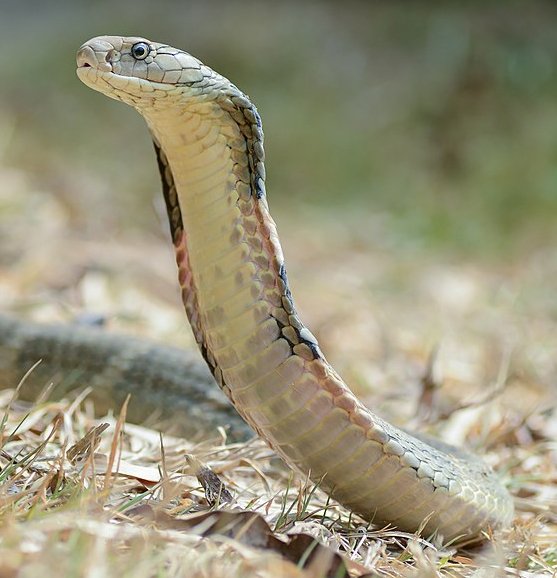
শঙ্খচূড়, King Cobra
(Ophiophagus hannah)
— It is a venomous snake that possesses a hood. It measures about 12 to 15 feet in length. Being the world's largest venomous snake with a hood, it lives in deep jungles. The type of venom it carries is a neurotoxin.
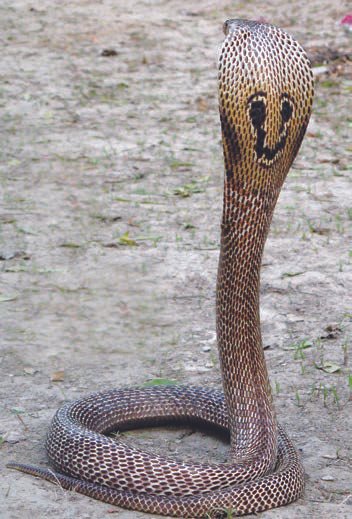
গোখরো, Spectacled Cobra
(Naja naja)
— It is a venomous snake that possesses a hood. It features a U-shaped spectacle mark on the back of its hood and measures about 4 to 5 feet in length. It prefers to stay in dry areas, and the type of venom it carries is a neurotoxin.
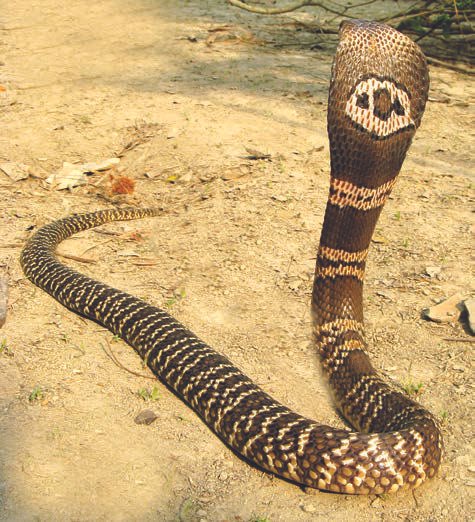
কেউটে, Monocled Cobra
(Naja kaouthia)
— It is a venomous snake that possesses a hood. It can be easily identified by the circular (O) mark on the back of its hood and measures about 5 to 6 feet in length. It is mostly found in the vicinity of water bodies, and the type of venom it carries is a neurotoxin.
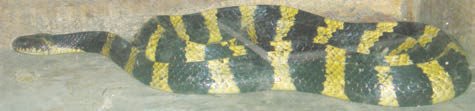
শাঁখামুটি, Banded Krait
(Bungarus fasciatus)
— It is a venomous snake, but it does not have a hood. It measures about 5 to 6 feet in length and can be easily identified by the broad yellow and black bands on its body. It is very calm and slow-moving by nature. Being nocturnal, it comes out at night. It hardly ever bites; instead, it maintains the balance of nature by feeding on common kraits and other snakes. The type of venom it carries is a neurotoxin.
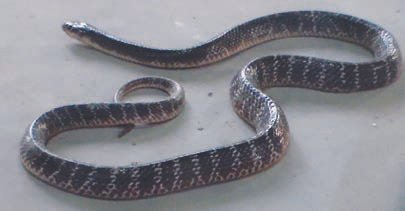
কালাজ, Common Krait
(Bungarus caeruleus)
— It is a venomous snake that does not have a hood. It measures about 3 to 4 feet in length. Its head is relatively small, and it has a shiny blackish or grey-coloured body. Being nocturnal, it comes out at night. It is known for biting people while they are in bed, which is a rare behavior globally. It is considered the most venomous land snake in Asia, and the type of venom it carries is a neurotoxin.
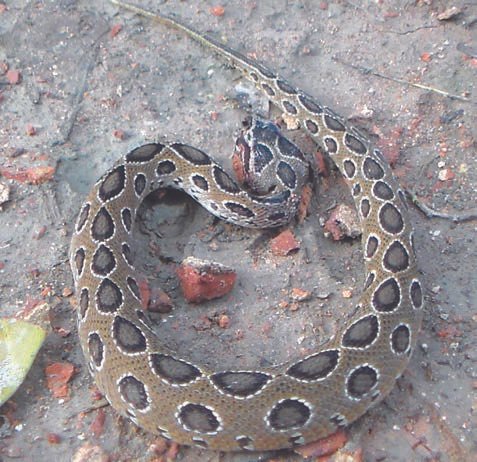
চন্দ্রবোড়া, Russell's Viper
(Daboia russelii)
— It is a venomous snake that does not have a hood. It measures about 2 to 3 feet in length and has a flat, triangular head. With its stout build, it can be easily identified by the three rows of circular markings running from its head to its tail. It is known for its ability to lunge or jump to bite, and the type of venom it carries is a haemotoxin.
Non-Venomous Land Snakes
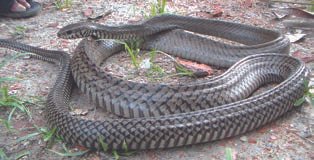
দাঁড়াস, Rat snake
(Ptyas mucosus)
— It is non-venomous and measures about 5 to 6 feet in length. It can be easily identified by its large eyes, pointed snout, checkered markings, and high speed. It is commonly seen moving about everywhere during the daytime and is an expert at exterminating rats.
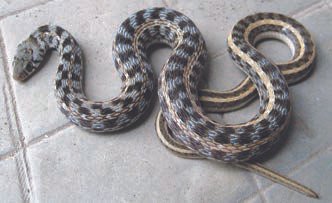
হেলে, Striped keelback
(Amphiesma stolatum)
— It is non-venomous and measures about 1 to 1.5 feet in length. Two brown-coloured stripes can be seen running from its head all the way down to its tail. It is frequently spotted roaming about in gardens and other such places, and it is primarily active during the daytime.
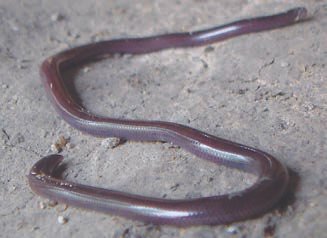
পুঁয়ে, Blind Snake
(Typhlops beddomei)
— It is non-venomous and measures about 5 to 6 inches in length. It lives underground and is the smallest snake in the world. It is also referred to as the blind snake, and it feeds on insect larvae, earthworms, and other such things.
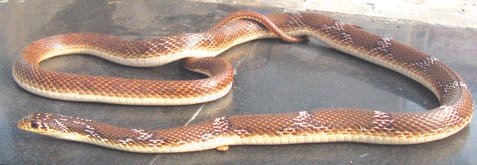
ঘরচিতি, Wolf snake
(Lycodon aulicus)
— It is non-venomous and measures about 2 to 3 feet in length. It has broad bands starting from its head that gradually fade away towards the tail. It is brown in colour and is often spotted roaming near houses or around the veranda. Being nocturnal, it comes out at night.
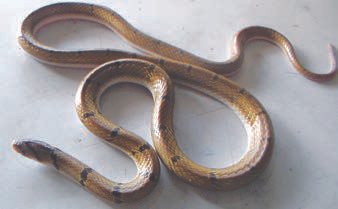
উদয়কাল, Banded kukri
(Oligodon ornensis)
— It is non-venomous and measures about 2 to 3 feet in length. There is an inverted (^) V-shaped mark on top of its head, and it features black bands all over its body. It is quite harmless and rarely seen, as it usually comes out only during the evening hours.
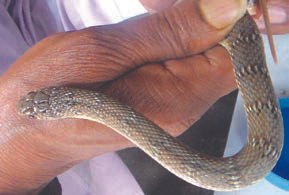
ক্ষেতমেটে, Banded racer
(Argyrogena fasciolata)
— It is non-venomous and measures about 2.5 to 3 feet in length. It is brown in colour and is usually found in paddy fields. It is often mistaken for a juvenile Rat Snake (Dhaman). Being active during the day, it is seen during the daytime, and rats are its preferred food.
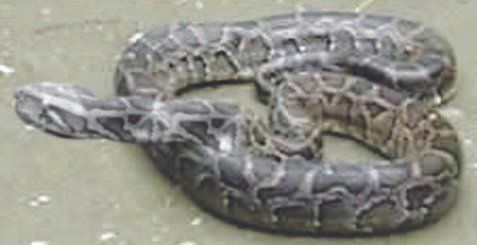
ময়াল, Indian rock python
(Python molurus molurus)
— It is non-venomous, and snakes of this species can grow up to 25 feet in length. There is a completely baseless myth that these snakes can suck in humans with their breath. This species of snake is among the largest in the world and is commonly found in the forests of the Sundarbans.
Arboreal Snakes
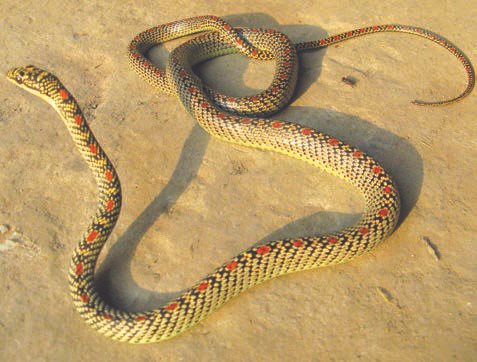
কালনাগিনী, Common flying snake
(Chrysopelea ornata)
— It is non-venomous and lives in trees. It measures about 2 to 3 feet in length. Such a vibrant variety of colours is not seen in any other snake. There are many myths and folklores associated with this snake, and it is also known as the flying snake. It is found in the mangroves of the Sundarbans in South 24 Parganas, the Baruipur area, and parts of Sonarpur.
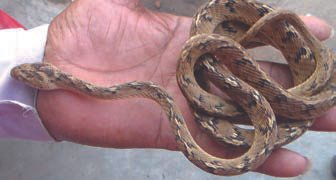
কাঁড় সাপ, Common cat snake
(Boiga trigonata)
— It is non-venomous and lives in trees, but it is also seen on the ground. It measures about 2 to 2.5 feet in length. This snake has eyes like a cat, which is why it is called the cat-eyed snake. When threatened, it coils its body and lunges its head forward to strike. It is primarily active and moves about during the daytime.
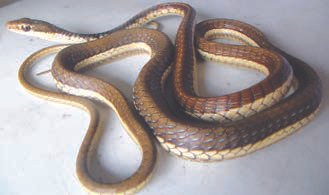
বেত আছড়া, Common bronze back tree snake
(Dendrelaphis tristis)
— It is non-venomous, lives in trees, and is about 2 to 3 feet in length. It has a very restless nature and can leap from one tree to another. It is active and moves about during the daytime, and grasshoppers and insects are its preferred food.
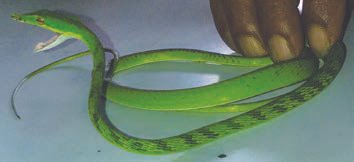
লাউডগা, Common vine snake
(Ahaetulla nasuta)
— It is non-venomous and lives in trees. It is slender and green, resembling the tender tip of a bottle gourd vine, and has a pointed snout. There is a common misconception that it pecks out or attacks people's eyes, which is entirely false. It is usually spotted during the daytime, but unfortunately, its numbers are rapidly declining across various blocks.
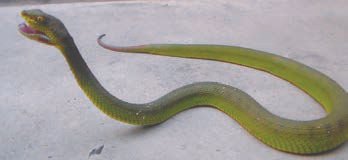
গেছো বোড়া, Pit viper
(Trimeresurus albolabris)
— It is venomous and lives in trees, measuring about 2 to 3 feet in length. It is green in colour, with a triangular head and a blunt snout. Since its venom fangs are located at the back of its jaw, it is also known as a rear-fanged snake. There is no risk of human fatality from the bite of this snake. They are commonly found in the mangrove forests of the Sundarbans and are active during the daytime.
Aquatic Snakes
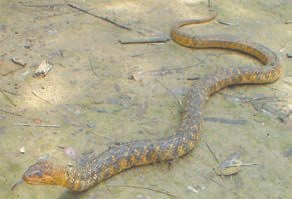
জলঢোঁড়া, Checkered keelback
(Xenochrophis piscator)
— It is non-venomous and lives in fresh water. It measures about 2 to 3 feet in length. It is an aggressive snake and remains equally active during both day and night. Among non-venomous snakes, its bite is the most frequently reported.
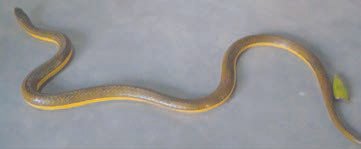
মেটেলি, Olive keelback
(Atretium schistosum)
— It is non-venomous and is frequently spotted in fresh water and muddy areas. It measures about 1.5 to 2 feet in length, featuring a narrow head and a stout belly. Unfortunately, its population is rapidly declining. This snake provides immense benefit to the environment by feeding on mosquito larvae and is typically seen moving about during the evening hours.
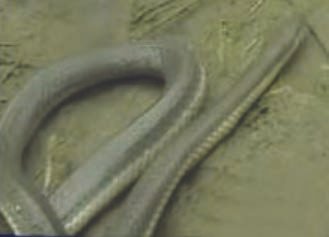
গাং মেটেলি, Common smooth scaled water snake
(Enhydris enhydris)
— It is a non-venomous, saltwater snake. It measures about 2 to 3 feet in length. This harmless snake can be seen feeding on fish in the puddles and hollows left behind after the low tide in rivers. It remains active throughout the day and night.
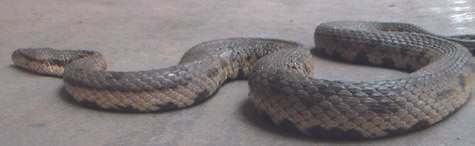
কুকুরমুখো, Dog-faced water snake
(Cerberus rynchops)
— It is a non-venomous, saltwater snake, measuring about 2 to 4 feet in length. It has a rather stout and thick-set appearance. It is commonly spotted at the water's edge in the river during high tide. On its belly, there are horizontal yellow and white, and sometimes black bands.
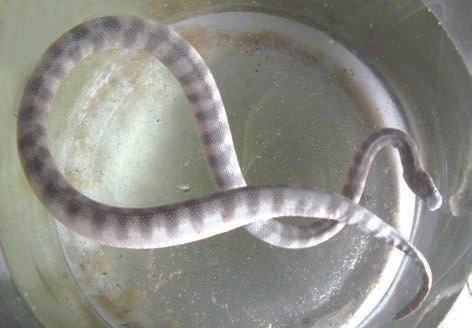
জল কেরাল, Enhydrina schistosa
(Enhydrina schistosa)
— It is a highly venomous sea snake that often enters rivers during high tide. Its head is narrow, and its tail is flat and broad. It is a known fact that all sea snakes with flat tails are venomous. They possess two venom fangs located at the back of their gums, and the type of venom they carry is a neurotoxin.